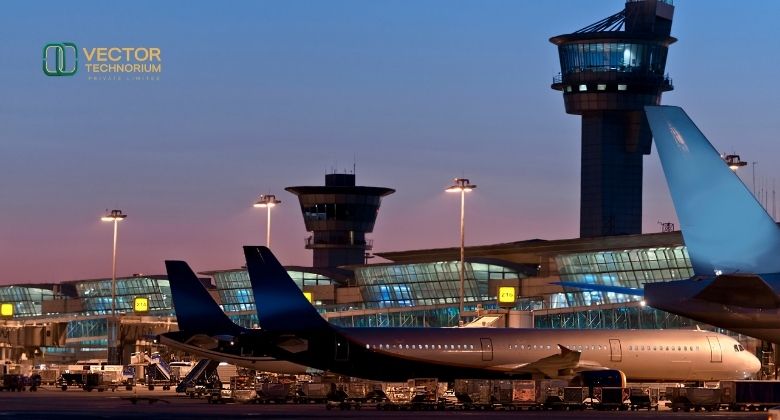
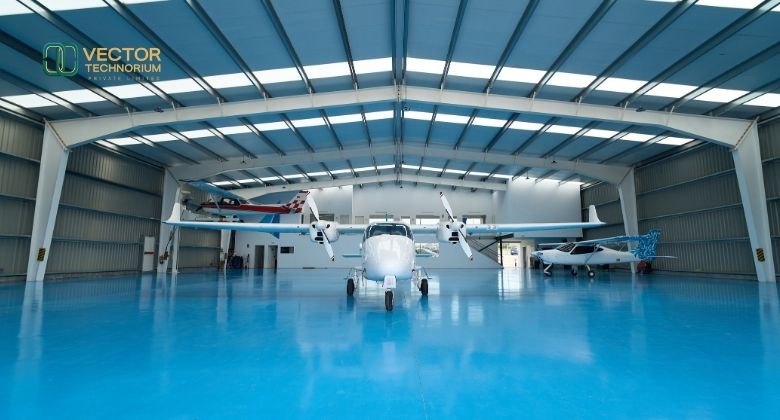
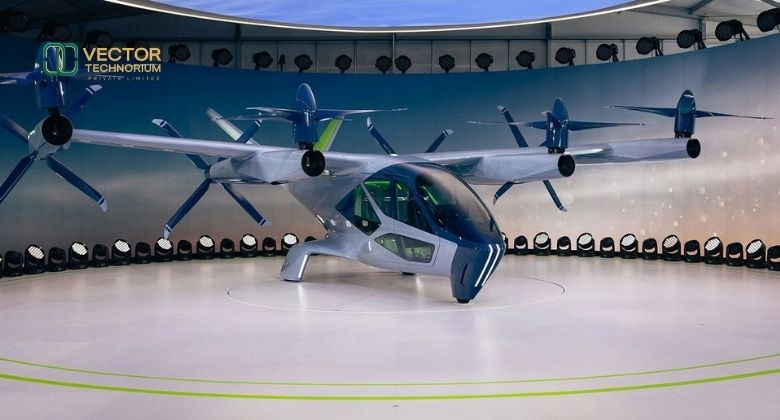
Aviation infrastructure is being rebuilt in real time. Not only because passenger demand is returning in waves, but because the definition of “aviation” is expanding. Airports are becoming multi-modal energy hubs. Maintenance, Repair and Overhaul (MRO) providers are shifting from traditional hangar work to data-driven, compliance-heavy industrial operations. And new air mobility concepts are forcing planners to think beyond runways and terminals.
This article is designed as Vector Technorium’s flagship overview of what is changing, why it matters, and how leaders across airports, MROs, and emerging air mobility can make decisions with confidence.
We will cover the ten most important trends shaping aviation infrastructure right now, with practical implications for operators, developers, and engineering teams.
Airports are being redesigned around operational resilience, not just capacity
For decades, infrastructure programs focused heavily on capacity expansion: more gates, bigger terminals, extended aprons. That still matters, but the dominant design principle has shifted toward resilience. Airports are treating disruptions as normal operating conditions, including weather volatility, supply chain shocks, cyber incidents, staffing gaps, and airspace constraints.
What this changes on the ground:
- Redundant systems are becoming standard in critical functions like baggage, security screening, power distribution, and IT connectivity.
- Flood, heat, and wind adaptation are moving from “nice-to-have” to mandated design inputs, affecting drainage, pavement specs, building envelopes, and equipment selection.
- Flexible space planning is replacing rigid, single-purpose layouts. Holdrooms, security zones, and landside circulation are being designed for rapid reconfiguration.
Where Vector Technorium typically adds value is in bridging engineering design with real operations: translating resilience goals into maintainable systems, sensible phasing, and infrastructure that works under stress, not only on opening day.
Electrification is becoming a core airport infrastructure program
Electrification is no longer limited to a few e-GSE chargers tucked behind a terminal. It is becoming a structured, multi-year infrastructure transformation, driven by emissions targets, local air quality requirements, and the economics of energy.
What is driving this trend:
- Rapid growth in electric ground support equipment (e-GSE) fleets.
- Fixed electrical ground power (FEGP) and pre-conditioned air (PCA) expansion to reduce APU usage.
- Airside vehicle electrification, including maintenance fleets, apron buses, and security vehicles.
- Early planning for electric aircraft and hybrid operations.
Practical infrastructure implications:
- Airports need load studies and phased capacity planning that factor in charger diversity, peak demand windows, and future aircraft energy requirements.
- Utility coordination becomes a major program risk. Grid upgrade lead times can dominate schedules.
- Charger placement and cable routing affect safety, turnaround time, and winter operations.
Vector Technorium supports electrification programs with an infrastructure-first approach: electrical master planning, constructability, airside safety integration, and phased deployment that avoids operational disruption.
Fuel infrastructure is diversifying: SAF now drives storage, blending, and logistics decisions
Sustainable Aviation Fuel (SAF) has moved from pilot programs to long-term procurement strategies. Even when SAF volumes are modest, the infrastructure implications can be significant, because operators must manage compatibility, certification, supply continuity, and quality assurance.
Key shifts happening now:
- Airport fuel farms are being evaluated for SAF co-mingling, dedicated tanks, or blended storage.
- Quality control processes are tightening to protect aircraft and engines, especially where multiple supply routes and blending points exist.
- Hydrant systems, filtration, and monitoring are being reviewed for material compatibility and contamination risk management.
Important point: most airports will not “build a SAF system” in isolation. They will adapt existing fuel infrastructure to support evolving supply contracts and regulatory expectations. Vector Technorium’s role often sits at the intersection of infrastructure and compliance: designing upgrades that meet safety standards, preserve operational continuity, and keep fuel handling auditable.
MRO facilities are expanding and modernizing for new aircraft materials, analytics, and throughput pressure
MRO demand is rising, and the nature of the work is changing. Newer airframes, composite-intensive structures, advanced engines, and digital maintenance records all shape what an MRO facility must be able to do.
What modern MRO infrastructure must support:
- Higher throughput without sacrificing quality, which forces leaner workflows and better bay utilization.
- Specialized environments for composites, coatings, and sensitive avionics work, including controlled temperature and humidity where required.
- Data-enabled maintenance, meaning strong connectivity, secure networks, and work instruction systems integrated into the facility layout.
- Environmental and safety compliance, especially around chemical handling, emissions, noise, and wastewater.
Designing an MRO hangar is no longer just about clear span, door height, and floor loads. It is about building an industrial system.
Vector Technorium supports MRO owners and operators through end-to-end facility planning: site constraints, aircraft compatibility, utilities, tooling zones, EHS considerations, and phasing strategies that keep aircraft moving.
Digital twins and asset data are moving from innovation projects to operational requirements
Airports and MROs are recognizing a hard truth: you cannot maintain what you cannot see. Asset inventories are often fragmented. As-built drawings can lag reality. Maintenance systems may not reflect field conditions. The result is higher downtime, slower response, and more expensive capital planning.
Digital twin adoption is accelerating, but the most successful programs are practical, not flashy.
Key capabilities that matter:
- Accurate asset registers tied to location, condition, and service history.
- BIM-to-AIM handover processes so capital projects feed operations cleanly.
- Predictive maintenance inputs from sensors and system logs, especially for baggage, HVAC, power distribution, and critical MRO equipment.
- Scenario testing for capacity planning, disruption response, and phased construction.
Vector Technorium’s focus is on making digital infrastructure usable in day-to-day operations: defining data standards, structuring handover requirements, and aligning engineering deliverables with the CMMS/EAM reality on the ground.
Cybersecurity is now a physical infrastructure issue
Aviation has always been safety-critical. Now it is also security-critical in a new way. OT (Operational Technology) systems, from baggage handling to passenger boarding bridges, power management, access control, fuel systems, and hangar equipment, are connected and exposed.
The infrastructure impact is clear:
- Network segmentation is becoming a design requirement, not an IT preference.
- Secure-by-design specifications are entering procurement, affecting controls, PLCs, sensors, and vendor access models.
- Resilient architectures are needed for critical systems, including offline modes and fail-safe operation.
- Cyber incident response must be considered in operational planning, similar to how airports plan for fire alarms or runway closures.
For airports, cyber resilience affects terminal systems and campus utilities. For MROs, it affects tooling networks, test cells, parts traceability, and aircraft data handling.
Vector Technorium helps clients treat cybersecurity as an engineering constraint that shapes design, commissioning, and lifecycle maintenance, especially where OT and safety systems intersect.
Modular and off-site construction is reshaping how airports build and renovate
Airports cannot easily pause operations for construction. MROs cannot stop throughput without financial impact. This is why modular construction, prefabrication, and off-site fabrication are gaining momentum.
Where this trend is most visible:
- Restroom and concessions modules for terminal renovations.
- MEP skids and plant room assemblies to reduce on-site time and improve quality.
- Bridge and utility corridor components built off-site for predictable installation.
- Rapid stand and gate reconfigurations using standardized components.
The benefit is not only speed. It is schedule certainty, reduced airside risk, and improved safety performance. The trade-off is that design coordination and early decisions become more important.
Vector Technorium supports modular delivery by tightening the front end: clear interfaces, strong dimensional control, phasing that matches operations, and documentation that supports commissioning.
Apron, stand, and airfield upgrades are being driven by turnaround efficiency and mixed fleet realities
Turnaround time is a competitive weapon. Airports and airlines are re-evaluating the airside environment with a focus on efficiency, safety, and flexibility across different aircraft types.
Key infrastructure themes:
- Stand layout optimization for multiple fleet types, including widebody, narrowbody, and regional aircraft, plus contingency parking.
- Pavement rehabilitation using data-driven condition assessments and materials suited for more intense utilization patterns.
- Improved ramp lighting, markings, and guidance to reduce incidents and support low-visibility operations.
- De-icing and winter operations infrastructure that can handle changing weather patterns and stricter environmental requirements.
For many airports, the biggest gains come from “unsexy” improvements: re-striping, service road adjustments, better GSE staging, hydrant pit access, and reduced pushback conflicts.
Vector Technorium approaches airside projects with operational logic first: safety cases, constructability in live environments, and design that reduces friction for ramp teams.
Vertiports and advanced air mobility are forcing new standards for safety, energy, and integration
Advanced Air Mobility (AAM), including eVTOL concepts, is no longer purely speculative. While timelines vary by region and certification progress, serious planning is underway, and infrastructure decisions today will shape feasibility later.
AAM infrastructure is not simply “a helipad with chargers.” It introduces new requirements:
- High-power electrical capacity with careful load management, redundancy, and safe charging interfaces.
- Thermal and fire safety considerations for batteries and power electronics.
- Passenger processing and security models that may differ from traditional terminals.
- Noise, flight path, and community integration that must be solved early through planning and engagement.
- Intermodal connectivity, because vertiports are only useful if they connect cleanly to ground transport and existing aviation nodes.
Vector Technorium’s role in AAM programs often involves helping stakeholders move from concept visuals to real infrastructure plans: site selection, energy and safety requirements, operational flow, and scalable design that can evolve as standards mature.
Aviation campuses are becoming multi-tenant ecosystems, not single-purpose facilities
The modern airport is a regional economic platform. Around it sits cargo, MRO, logistics, training, catering, data centers, clean energy assets, and business parks. Many airports are actively building “airport city” strategies, and the infrastructure must support that growth without compromising core aviation operations.
What is changing:
- Utility planning must account for multiple tenants with different load profiles, resilience needs, and compliance obligations.
- Landside access and traffic management are becoming as important as airside capacity, especially with rideshare, micromobility, and bus/rail integration.
- Cargo and logistics infrastructure is expanding, including cold chain capabilities and automation readiness.
- Lease and development models increasingly depend on clear infrastructure responsibilities and service-level expectations.
Vector Technorium supports campus-scale planning with a systems view: utilities, phasing, tenant interfaces, permitting pathways, and program governance that reduces friction across stakeholders.
Across all ten trends, three themes keep repeating:
- Infrastructure decisions are becoming more interdependent. Energy affects operations. Cyber affects physical systems. Data affects maintenance and capital planning.
- Phasing and constructability matter as much as design. Aviation environments cannot stop. The winners will be those who can upgrade while operating.
- Compliance and safety expectations are rising. That includes environmental constraints, OT cybersecurity, fuel quality assurance, and workforce safety.
Vector Technorium’s work sits in that reality. We help aviation stakeholders plan, design, and modernize infrastructure that is safe, auditable, operationally practical, and future-ready.
How Vector Technorium Supports the Full Aviation Infrastructure Lifecycle
Vector Technorium serves the major sectors reshaped by these trends:
- Airports and terminals: master planning support, utility and energy programs, airside upgrades, resilience and modernization initiatives, and operationally safe phasing.
- MROs and hangar facilities: facility planning, utilities and industrial systems, workflow-driven layouts, compliance-ready designs, and expansion programs.
- Air mobility and emerging infrastructure: early-stage feasibility, site and energy planning, safety requirements translation, and scalable concept-to-design support.
- Cross-cutting infrastructure programs: digital asset readiness, commissioning support, cybersecurity-aware OT design coordination, and lifecycle maintainability.
If you are building new capacity, retrofitting aging assets, integrating electrification, preparing for SAF, or planning for advanced air mobility, the common requirement is the same: infrastructure that performs reliably in real operations.
Closing perspective
Aviation infrastructure is not entering a single trend cycle. It is entering a multi-decade reconfiguration, shaped by energy transition, operational resilience, digital systems, and new flight concepts. Airports, MROs, and air mobility developers that treat infrastructure as a strategic capability, rather than a background cost, will be the ones that scale safely and profitably.
Vector Technorium exists to help teams deliver that outcome with engineering rigor, practical execution, and a clear view of what is coming next.